Stay informed with the latest insights on Mexico's economy via statistics, AI analysis, and synthesis.
Today's Lead:
Monetary Policy — Market Expectations: new observations
Financing — Nonfinancial Lending: new observations
Financing — Volatility: data revised lower

Updated: 2026-10-27
Today in the data
Market Expectations: nominal 10y-3y spread now 1.51pp
New reading for 2026-10-26
Wall Street showed optimism following an announcement from Anthropic, a prominent AI company. Meanwhile, the Mexican Stock Exchange (BMV) experienced a decline, falling by 0.58%. The market's reaction reflects investor sentiment towards advancements in artificial intelligence and their potential impact on the economy. — El Financiero, 26 Oct 2026. Read more
On October 26, the Mexican peso strengthened against the US dollar, reversing previous losses. The article highlights the peso's performance in the foreign exchange market, noting the factors contributing to this recovery. Specific figures regarding the exchange rate were not provided. — El Financiero, 26 Oct 2026. Read more
Afores in Mexico are generating more revenue through commissions as the National Commission of Retirement Savings (Consar) plans to lower the commission rate for 2027. This change aims to enhance the efficiency of retirement savings management, but specific figures regarding the current commission rates or the new rates for 2027 were not disclosed in the article. — Expansión, 26 Oct 2026. Read more
The article discusses the implications of rising Treasury yields for investment strategies. It highlights that higher yields may lead to a shift in investor preferences, potentially favoring fixed-income assets over equities. Experts suggest that this trend could influence market dynamics and investment decisions significantly. — El Financiero, 26 Oct 2026. Read more
Revolut has officially launched its payroll services for workers in Mexico, aiming to provide a modern alternative for salary disbursement. The company emphasizes its commitment to enhancing financial services in the region, targeting both businesses and employees. This move marks a significant expansion of Revolut's operations in Latin America. — Expansión, 26 Oct 2026. Read more
The Condusef reported that the main reason for the cancellation of major medical expense insurance policies is the increase in prices. This trend highlights the financial strain on consumers as they struggle to maintain coverage amid rising costs. — Expansión, 22 Oct 2026. Read more
América Móvil's performance has driven the Mexican Stock Exchange (BMV) to surpass 70,000 points. Meanwhile, the Mexican peso has fallen to 18.68 per dollar. This development reflects significant movements in the market influenced by the telecommunications giant. — Expansión, 21 Oct 2026. Read more
The article discusses how interest-free payment plans can lead to financial strain, as they encourage consumers to make small monthly payments that accumulate over time. It highlights the potential risks of these plans, emphasizing the importance of understanding the long-term financial commitments they entail. — Expansión, 21 Oct 2026. Read more
The Mexican economy is reportedly gaining momentum, with key sectors demonstrating improvement. President Claudia Sheinbaum emphasized the importance of maintaining this growth trajectory. Additionally, Banxico Governor Victoria Rodríguez Ceja noted that the central bank is closely monitoring economic indicators to ensure stability. — El Financiero, 21 Oct 2026. Read more
The Mexican peso experienced a notable increase against the US dollar today, attributed to various market movements. The article discusses the factors influencing this change but does not provide specific figures regarding the exchange rate or the extent of the gain. — El Financiero, 20 Oct 2026. Read more
How Stablecoins and Cards Are Transforming Remittances in Mexico — Google News, 26 Oct 2026. Read more
Mexico Oil & Gas: Lessons from Production Sharing Contracts — Google News, 26 Oct 2026. Read more
Mexico’s week in review: Trade optimism holds despite a CIA-linked treason case — Google News, 24 Oct 2026. Read more
President Trump says tariff deal with Mexico is close — The Rio Times — Google News, 24 Oct 2026. Read more
Updated: 2026-09-26 by Alexander Dentler
Key Takeaways
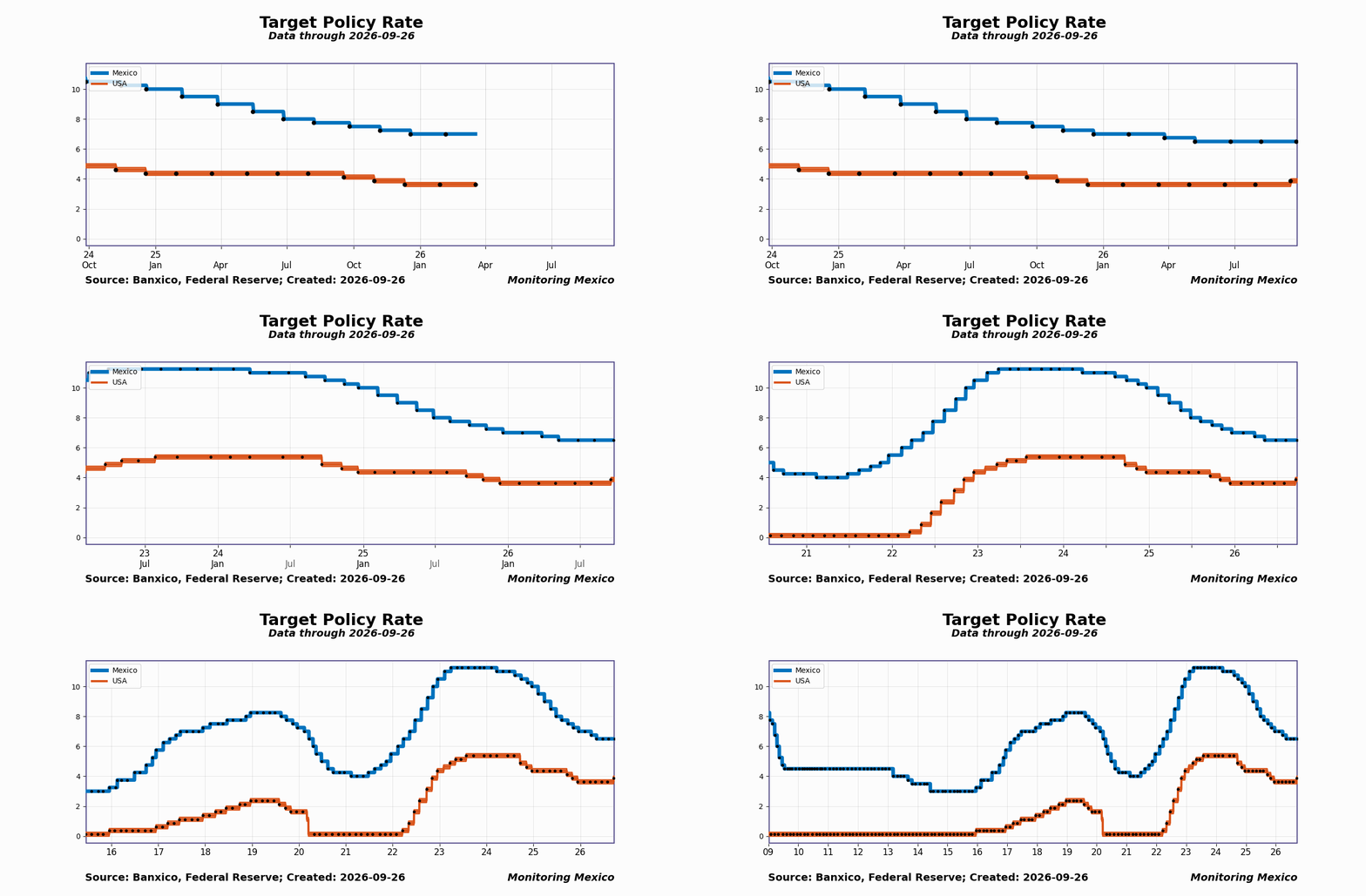
Following the May 7, 2026 decision, Banxico's policy rate stands at 6.50%. Following the May 7, 2026 decision, Banxico's policy rate stands at 6.50%. The central bank opted to hold rates steady, reflecting a cautious approach in a complex economic landscape. This decision marks a pause in the recent trajectory, with the cumulative change since the last rate cut totaling -0.25%. As the next meeting approaches, market participants are keenly observing the evolving economic indicators.
The Fed's target rate currently sits at 3.88%, following a recent increase of 0.25%. The Fed's target rate currently sits at 3.88%, following a recent increase of 0.25%. This sets a rate differential of 2.62% in favor of Mexico, underscoring a divergence in monetary policy as Banxico maintains its stance while the Fed resumes tightening. Historically, the Fed has moved first in these paired decisions, establishing a clear first-mover advantage in recent cycles.
The rate differential creates significant implications for capital flows and currency dynamics. The rate differential creates significant implications for capital flows and currency dynamics. A higher rate in Mexico may attract foreign investment seeking yields, potentially stabilizing the peso amid increasing economic uncertainties. However, it also raises concerns about maintaining policy autonomy in the face of external pressures, particularly as geopolitical tensions and domestic security issues loom.
The central bank's policy rate is the primary tool for steering inflation and economic activity. Banxico targets 3% annual inflation and adjusts its overnight interbank rate to influence borrowing costs throughout the economy. The rate differential with the United States affects capital flows and exchange rate dynamics — a wider spread can attract foreign investment but may constrain domestic credit. Policy decisions are announced roughly every six weeks following scheduled monetary policy meetings.
Updated: 2026-10-09 by Ignacio Crane
Key Takeaways
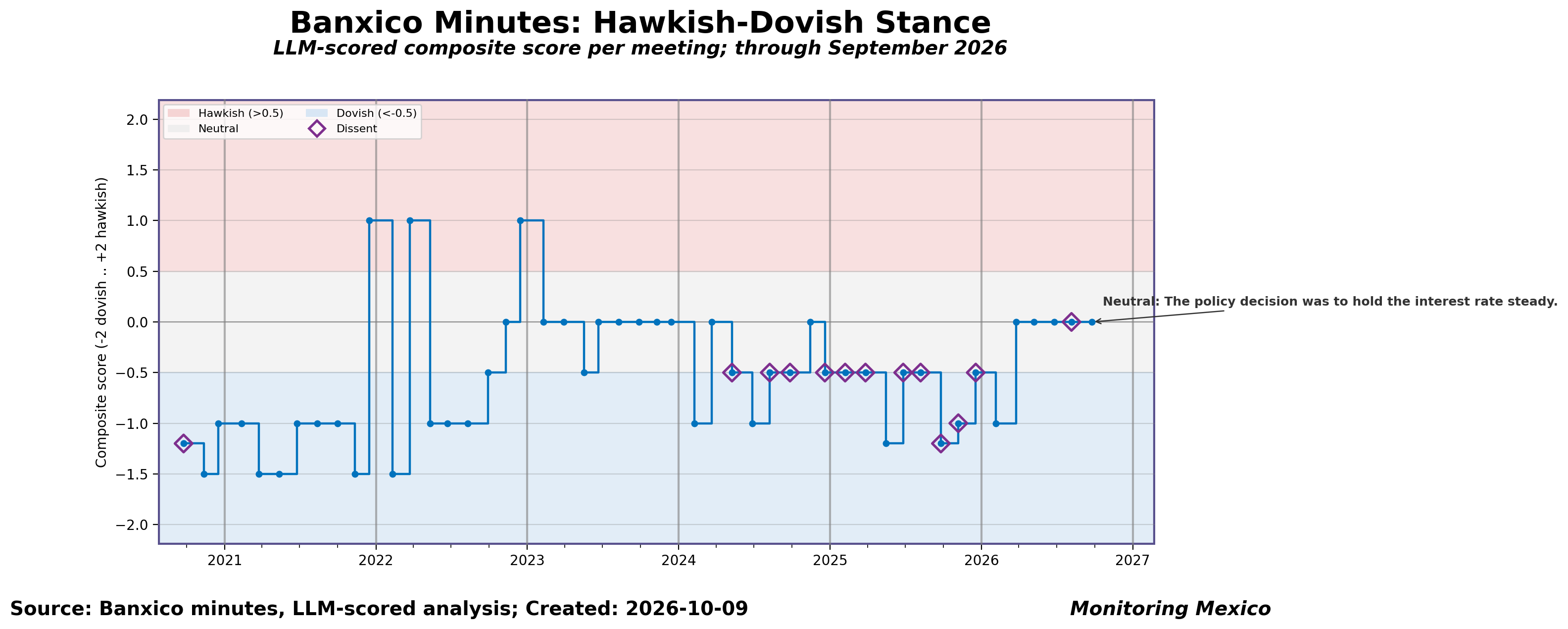
Banxico's minutes from the September 24 meeting show a neutral tone (composite score +0.0). Banxico's minutes from the September 24 meeting show a neutral tone (composite score +0.0). The committee's decision: The policy decision was to hold the interest rate steady.. Vote split: 5 hold.
The committee remains cautious, emphasizing the need to monitor geopolitical developments and their impact on inflation and growth. Forward guidance: The committee remains cautious, emphasizing the need to monitor geopolitical developments and their impact on inflation and growth. Future policy moves will be data-dependent. Hawkish signals: Persistent inflation pressures in advanced economies.; Federal Reserve's rate hike and expectations of further increases.. Dovish signals: Moderation in global economic growth.; Stabilization signs in Mexico's economic activity..
The tone is broadly unchanged compared with the prior 3 meetings. The tone is broadly unchanged compared with the prior 3 meetings. The latest composite score of +0.0 compares with a +0.0 average over the previous 3 meetings. The vote was unanimous, with no recorded dissent.
Each Banxico monetary policy meeting's published minutes are analyzed by a large language model, which scores the committee's overall tone on a composite scale from -2 (very dovish) to +2 (very hawkish) and extracts the vote split, forward guidance, and hawkish/dovish signals. Minutes are typically published by Banxico about two weeks after the corresponding policy decision, so this analysis always lags the live decision by that margin. The commentary on this page is assembled directly from those stored, structured fields rather than generated by a separate LLM call.
Updated: 2026-10-27 by María López

Key Takeaways
With new CPI data and revised consumer confidence signaling a shift in economic sentiment, markets are gearing up for Banxico's decision on November 5. The model-based expectations now suggest a significant chance of no action, with about 58% probability of holding rates steady. This marks a notable shift from previous assessments, reflecting the modal bucket moving from -25bp to ±0bp. Given the current expected change of -11bp, it’s clear that the committee is weighing its options carefully amidst a backdrop of persistent inflation concerns and external pressures.
Recent observations saw the peso stabilize, while inflation trends continue to ease. The latest data refresh indicates that while inflation has eased, the peso's stability is holding firm. These changes could influence the committee’s decisions, but the core data remains unchanged from prior assessments.
Moderate dovish pull from easing CPI combines with a slight hawkish pressure from external economic factors, setting the stage for a complex decision. Top drivers include the easing inflation, which is applying moderate dovish pressure, while external economic factors exert slight hawkish pressure. Notably, the economic policy uncertainty remains a critical negative driver, reflecting ongoing market anxieties. However, it’s essential to remember that the decision ultimately hinges on the committee’s judgment, beyond just the model’s mechanics.
Ordered Probit Probabilities
| Rate Change | 04 Feb | 05 Feb 2026 | Δ |
|---|---|---|---|
| Cut | 58.4% | 42.0% | -16.4 |
| Hold | 41.6% | 58.0% | +16.4 |
| Hike | 0.0% | 0.0% | +0.0 |
| E[Δrate] | -17.5 bp | -11.3 bp | +6.2 bp |
Probabilities in %. Modal bin in bold. E[Δrate] = probability-weighted expected change in basis points.
When markets and the public can anticipate how and why the central bank acts, uncertainty falls and policy becomes more effective. Clear communication helps businesses plan investments, households make borrowing decisions, and international investors gauge currency risks. Economists often stress the importance of clarity and traceability — the ability to follow and understand decisions step by step. Without it, rate moves risk being misread, causing volatility instead of stability. With it, policy signals are more credible, anchoring expectations and strengthening the central bank's influence.
Rate-change probabilities are estimated using an ordered probit model with eight macroeconomic and financial drivers: consumer price inflation (CPI), consumer confidence, the 30-day peso/dollar change, the CETES 28-day spread, stock market growth, the yield curve slope (10Y minus 2Y), Mexico's Economic Policy Uncertainty index, and the Fed-Banxico rate differential. The model maps these drivers into probability bins for the next monetary policy decision, ranging from cuts of 50 basis points or more to hikes of the same magnitude. Coefficients are estimated on the historical record of Banxico decisions and their pre-decision data environment. Probabilities update daily as driver series refresh and should be treated as one input among many.
Out-of-sample backtest across 29 past meetings: the modal prediction matched the actual decision 38% of the time, directional accuracy (hike/hold/cut) was 55%, Brier score 0.783. Out-of-sample backtest across 29 past meetings: the modal prediction matched the actual decision 38% of the time, directional accuracy (hike/hold/cut) was 55%, Brier score 0.783. Lower Brier scores indicate better-calibrated probability forecasts.
Updated: 2026-10-26 by Pablo Rivas
Key Takeaways
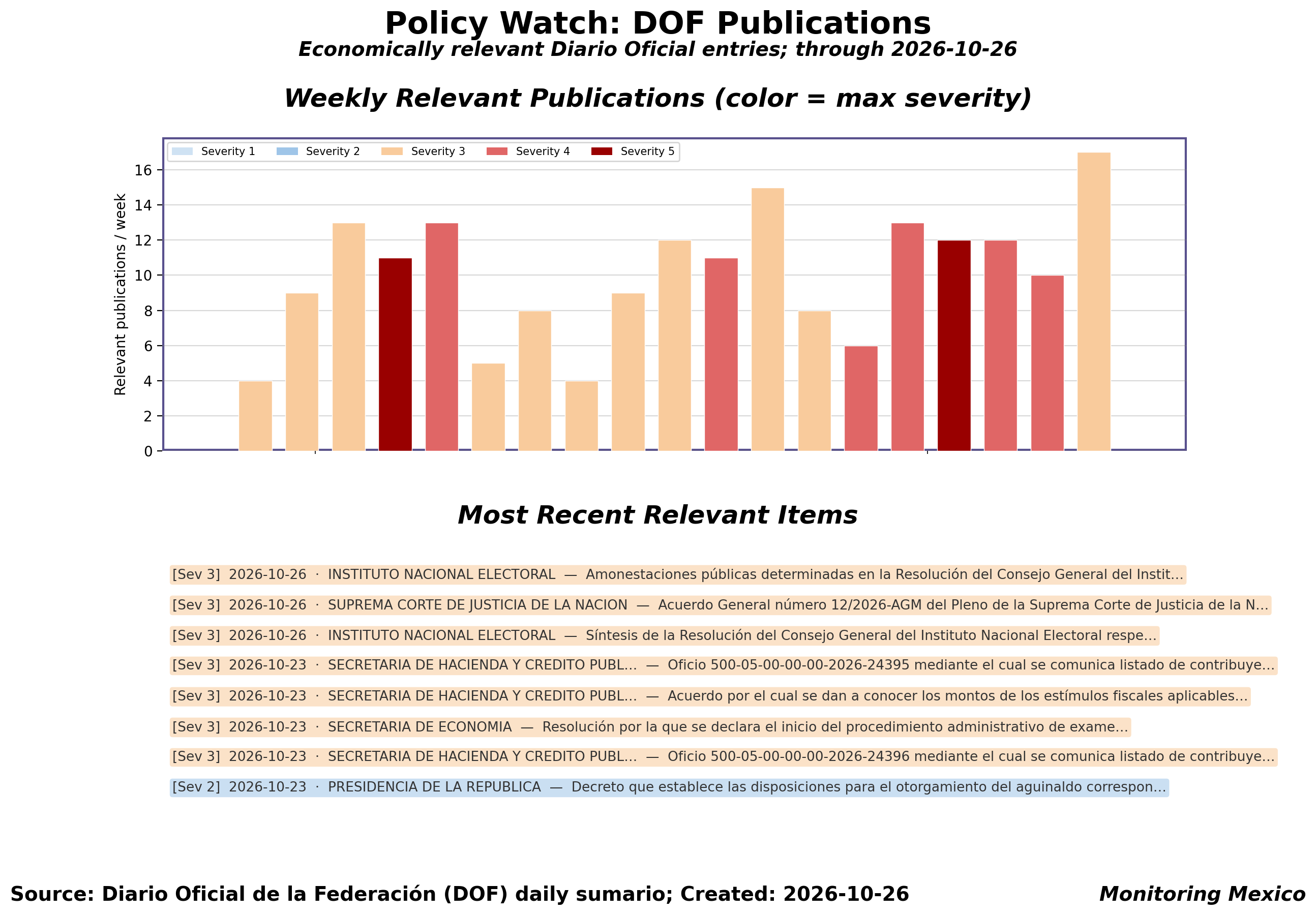
The DOF carried 17 economically relevant publications in the week ending October 26, 2026. The DOF carried 17 economically relevant publications in the week ending October 26, 2026. By category: judicial (8), tax (5), trade (3), energy (2), labor (2). The weekly maximum severity reached 3/5.
Recent notable publications include:. October 26 — INSTITUTO NACIONAL ELECTORAL: Amonestaciones públicas determinadas en la Resolución del Consejo General del Instituto Nacional Electoral, respecto del procedimiento admi… (severity 3/5). October 26 — SUPREMA CORTE DE JUSTICIA DE LA NACION: Acuerdo General número 12/2026-AGM del Pleno de la Suprema Corte de Justicia de la Nación, de catorce de octubre de dos mil veintiséis, que… (severity 3/5). October 26 — INSTITUTO NACIONAL ELECTORAL: Síntesis de la Resolución del Consejo General del Instituto Nacional Electoral respecto de las irregularidades encontradas en el dictamen c… (severity 3/5).
CONAMER (the Comisión Nacional de Mejora Regulatoria), which previously required draft regulations to be pre-published for public consultation before taking effect, was extinguished by a reform enacted in June 2025. With that pre-publication consultation step gone, the Diario Oficial de la Federación is now the earliest official signal available for new regulations, decrees, and reforms — there is no longer an upstream draft-stage checkpoint to monitor instead.
This monitor scans the DOF's daily sumario (official gazette summary) for publication titles and issuing organisms, then applies a keyword classifier — not an LLM — to flag economically relevant entries across six categories (tax, trade, labor, energy, financial regulation, judicial) and assign a severity score from 1 (routine) to 5 (major fiscal/labor policy change, e.g. Miscelánea Fiscal or a minimum-wage decree). Only sumario titles and issuing organisms are scanned in this MVP; full document text is not retrieved or analyzed.
So…what is this—and why am I doing it?
This project began with a simple question in 2021: how much of the work of producing useful economic information can we hand over to machines? Monitoring Monetary Policy in Mexico is a thought experiment at that frontier. By combining statistical analysis, tailored visualizations, and large language models, it demonstrates how even highly specialized topics—such as Mexican monetary policy—can be made more accessible, relevant, and insightful. Meanwhile, the system is designed to run without human intervention on a daily basis. My role is to set the design; the automation carries it out.
When does data stop being a dump and start being a story?
The initiative builds on my earlier Monitoring Mexico project but has since evolved in important ways. Data is no longer simply displayed; it is analyzed, distilled, forecasted, visualized, interpreted, narrated, and contextualized. Large language models help transform both raw and modeled data into context, turning numbers into stories. In short, raw information is transformed into understanding.
Who’s in charge here—a Raspberry Pi or common sense?
Behind the scenes, the site runs on a Raspberry Pi 5 powered by Python and a library of custom routines. Automation drives much of the process, but human expertise remains essential in designing the explanation and presenting the material. The balance between machine efficiency and human judgment is what makes the project work.
How do we cut through the jargon and keep the signal?
The aim is straightforward: to bring clarity to an area often obscured by technical detail. Monetary policy shapes households, firms, and markets, yet its analysis usually remains confined to experts. By filtering, explaining, and visualizing the data, this project seeks to make that knowledge more transparent and more useful.
Is this the 80/20 rule you learn in business school in the wild?
At its core, the site is both a contribution to public understanding and an exploration of how informational value is created. It is a humble attempt to deliver 80% of the insights of a central bank analysis with 20% of the resources—while also testing what the future of knowledge generation might look like.
What might be new the next time you drop by?
This is very much a work in progress, with new features, analyses, and visualizations added over time. We can now at the brink of generating our very own economic policy uncertainty (EPU) index, and we consider a newsletter. But maybe a chatbot might be more appropriate? Coming back to check for updates is always a good idea. If the site sparks curiosity, fosters dialogue, or simply helps illuminate Mexico’s economic dynamics, it has achieved its goal.
Updated: 2026-10-23 by Alexander Dentler
Key Takeaways
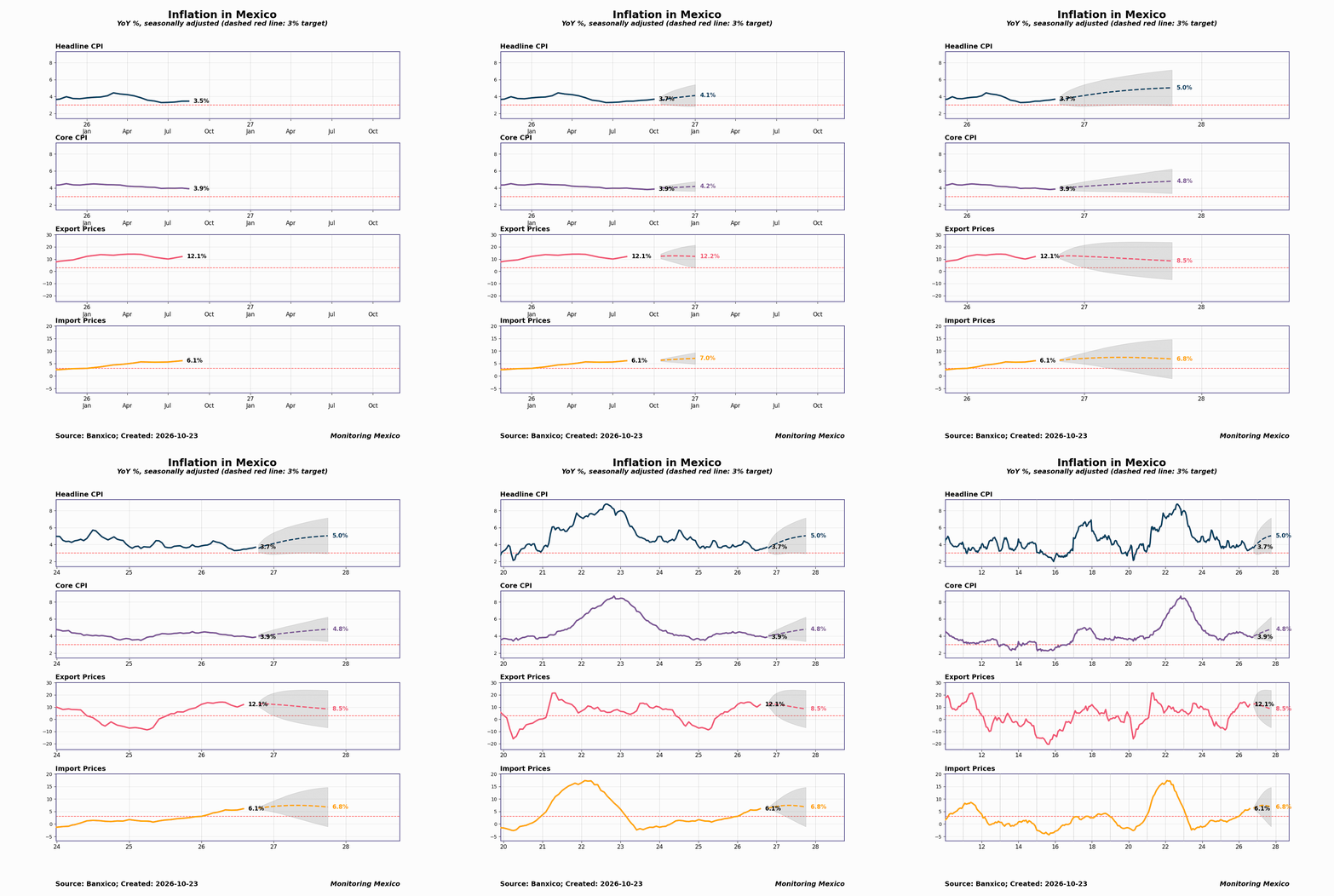
The mid-October 2026 CPI release shows headline inflation at 3.68%, comfortably within Banxico's target band of 2%-4%. The mid-October 2026 CPI release shows headline inflation at 3.68%, comfortably within Banxico's target band of 2%-4%. This marks a modest increase of 0.10% compared to the previous release, indicating a slow upward trend in consumer prices. While the current rate is near the 35th percentile historically, the slight rise suggests a delicate balancing act for policymakers as they navigate the implications of ongoing domestic and external pressures.
Core inflation, which excludes volatile food and energy prices, stands at 3.88%, indicating a higher underlying inflation trend compared to the headline figure. Core inflation, which excludes volatile components, stands at 3.88%, indicating a higher underlying inflation trend compared to the headline figure. This increase of 0.05% from the prior release suggests core inflation is diverging from the target, highlighting persistent price pressures in non-food segments. The divergence raises concerns that inflationary trends may be more entrenched than anticipated, which could complicate Banxico’s policy decisions moving forward.
Trade prices reflect a notable divergence, with export prices surging while import prices remain elevated. Trade prices indicate a notable divergence, with export price inflation at 12.06%, significantly higher than import price inflation at 6.09%. This stark contrast, driven by global commodity dynamics, underscores the complexity of the inflation landscape. The elevated export price growth may exert additional pressure on domestic price levels, necessitating close monitoring by policymakers as they weigh the implications for monetary policy.
| 1H Oct 2026 | 1H Oct 2027 | |||||
|---|---|---|---|---|---|---|
| Series | Current | Prev. Fcast | Error | 12M Fcast | Prev. 12M | Rev. |
| Headline CPI | 3.7 | — | — | 5.0 | 5.0 | +0.00 |
| Core CPI | 3.9 | — | — | 4.8 | 4.8 | +0.00 |
| Export Price Index | — | — | — | 8.5 | 8.5 | +0.00 |
| Import Price Index | — | — | — | 6.8 | 6.8 | +0.00 |
All values in percentage points (YoY, seasonally adjusted). "Error" = actual minus previous forecast. "Revision" = change in 12-month outlook since last update. "—" = no prior forecast available.
The Consumer Price Index (CPI) measures changes in the cost of a representative basket of goods and services purchased by Mexican households. Banxico targets 3% annual inflation with a tolerance band of 2%-4%. Core CPI — which excludes volatile food and energy prices — reveals underlying inflation trends that guide monetary policy. Import and export price indices extend the picture by linking Mexico's inflation dynamics to global markets, trade flows, and currency movements.
Headline CPI, core CPI, export prices, and import prices are projected six months ahead using a Vector Autoregression (VAR). The four series are estimated jointly, so each informs the others' forecasts through lagged interactions. Projections update each time new CPI data arrive and may shift materially after revisions.
Out-of-sample 12-period-ahead forecast backtest over 77 evaluation windows using the Vector Autoregression (VAR). Out-of-sample 12-period-ahead forecast backtest over 77 evaluation windows using the Vector Autoregression (VAR). RMSE measures the typical forecast error in the same units as the series; 'naive' is a no-change benchmark. Headline CPI (RMSE 1.07 vs 1.00 naive — 8% worse than the benchmark, n=77); Core CPI (RMSE 0.62 vs 1.02 naive — 39% better than the benchmark, n=77); Export Price Inflation (RMSE 7.27 vs 7.77 naive — 6% better than the benchmark, n=56); Import Price Inflation (RMSE 2.99 vs 2.05 naive — 46% worse than the benchmark, n=56).
Updated: 2026-06-26 by Alexander Dentler
Key Takeaways
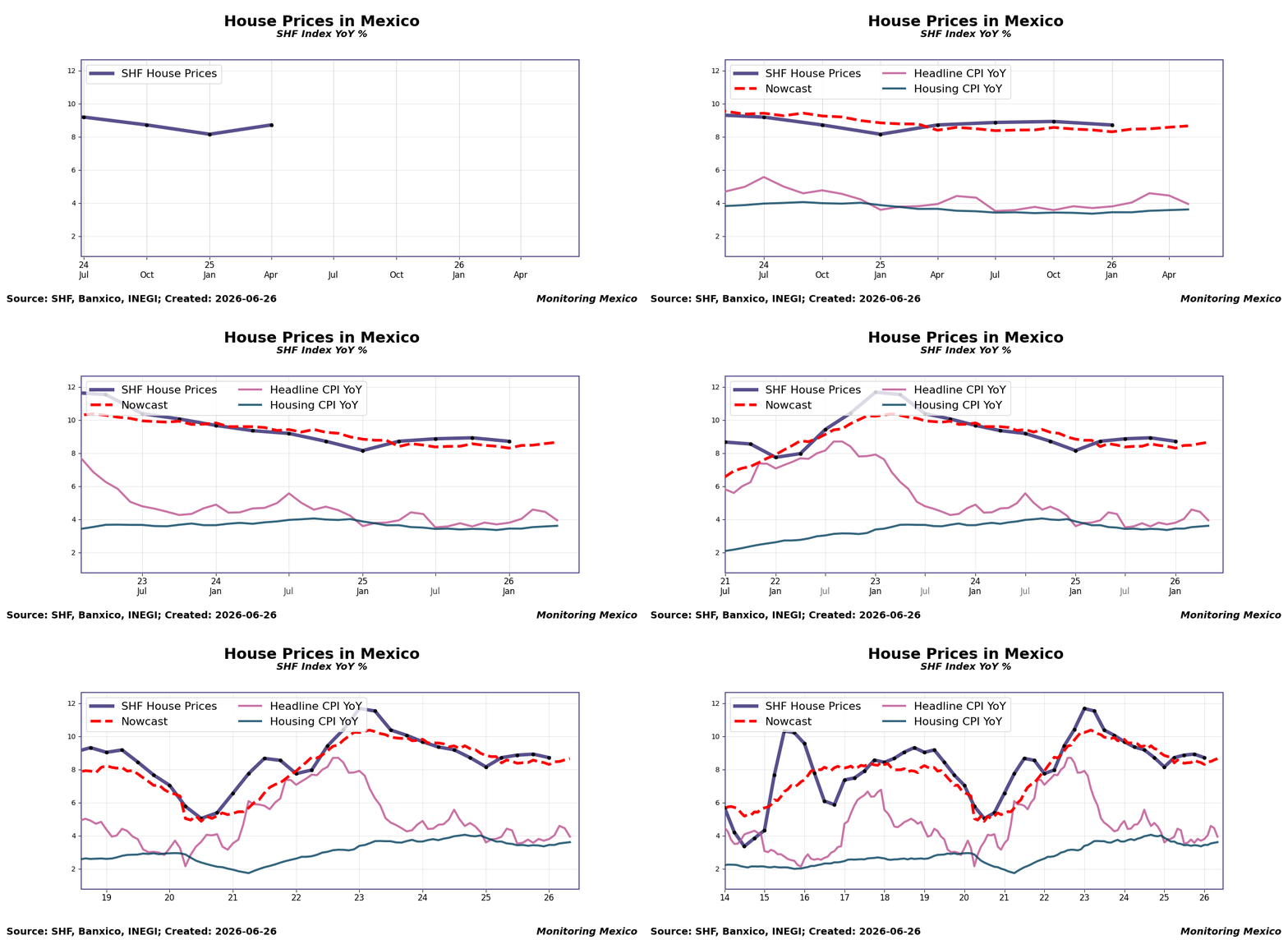
The recent update from the SHF House Price Index reveals significant insights into the state of the housing market, particularly with the new observation of 8.71% YoY inflation as of 2026-01-01. This level of house price inflation exceeds historical averages, positioning itself in the 75th percentile since 2006. In comparison, headline CPI inflation stands at 3.94% while housing CPI inflation is at 3.61%, suggesting that house prices are rising notably faster than general inflation metrics. This divergence reflects the ongoing demand pressures in the housing sector, despite a slight decline of 0.21 percentage points from the previous quarter.
The DFM nowcast provides valuable context, estimating house price inflation at 8.65% YoY as of 2026-05-01. This nowcast aligns closely with the latest observed value, indicating that auxiliary indicators such as mortgage lending and housing CPI are confirming the current trajectory rather than suggesting any significant upward or downward pressure. The model's consistency with observed data suggests that the dynamics within the housing market remain robust and supportive of sustained inflationary trends.
DFM Nowcast Comparison
| Observed | Nowcast | Prev. Nowcast | Gap | Revision | |
|---|---|---|---|---|---|
| SHF House Price Inflation (YoY) | 8.71% | 8.65% | 8.65% | -0.06 | +0.00 |
Observed: 2026-Q1. Nowcast: 2026-05. Previous nowcast: 2026-05. "Gap" = nowcast − observed. "Revision" = change in nowcast since previous run.
The SHF House Price Index is published quarterly by Sociedad Hipotecaria Federal, Mexico's federal mortgage development bank, typically around 40 days after the reference quarter ends. It is constructed from mortgage appraisal data (avalúos) using a Case-Shiller repeat-sales methodology, with breakdowns by state, new vs. used housing, and market segment (affordable vs. mid-to-high-end). Because the index reflects prices at the point of mortgage origination, it captures credit-driven demand rather than asking prices, making it a tighter gauge of actual transaction values and collateral quality across the housing market.
A Dynamic Factor Model (DFM) filters the quarterly SHF House Price Index using five Banxico auxiliary series — the funding rate, mortgage lending volumes, a housing purchase survey indicator, the SPF unemployment forecast, and construction activity — plus two CPI components (headline and housing subcategory). The model extracts a common factor from these seven indicators, producing a smoothed nowcast that updates between quarterly SHF releases whenever auxiliary data arrive. This filtered estimate helps distinguish persistent trends from quarterly noise in the observed house price series.
Out-of-sample backtest over 12 evaluation windows using the Dynamic Factor Model (DFM). Out-of-sample backtest over 12 evaluation windows using the Dynamic Factor Model (DFM). RMSE measures the typical forecast error in the same units as the series; 'naive' is a no-change benchmark. House Price Nowcast (RMSE 1.32 vs 0.66 naive, n=12).
Updated: 2026-10-23 by Alexander Dentler

Key Takeaways
Brent oil prices have reached a notable high, with significant implications for Mexico's fiscal landscape. Brent oil prices, updated to September 2026, now stand at $102.02, reflecting a robust year-on-year increase of 50.9%. This latest observation indicates a strong upward momentum, as prices have risen sharply in recent months. Given that oil constitutes approximately 15% of federal revenue, this surge is likely to enhance the fiscal outlook for the Mexican government, potentially bolstering public investment.
Copper prices are also witnessing substantial growth, underscoring the metal's vital role in Mexico's mining sector. As of September 2026, copper is priced at $14,473.06, up 44.8% year-on-year. The recent trend shows a slight increase, suggesting continued demand for this essential commodity. Given that copper mining contributes around 2.4% to Mexico's GDP, this price elevation may invigorate economic activity, particularly in Sonora, which dominates the national production landscape.
Corn prices reflect a contrasting trend, yet they remain critical for food security in Mexico. Currently, corn is priced at $236.92 as of September 2026, marking a year-on-year increase of 20.8%. The trajectory has been upward recently, indicating rising costs for this staple commodity. As a net importer, Mexico's smallholder farmers, numbering around 1.5 million, are directly impacted by these price dynamics, which in turn affects food prices and tortilla costs, essential for household consumption.
Commodity prices feed directly into Mexico's inflation pulse and terms of trade. Oil and corn affect energy and food costs, while copper is a proxy for global industrial demand. For policymakers, sharp commodity swings can shift inflation expectations and fiscal balances, making these prices critical to monitor.
Updated: 2026-10-22 by Ignacio Crane
Key Takeaways
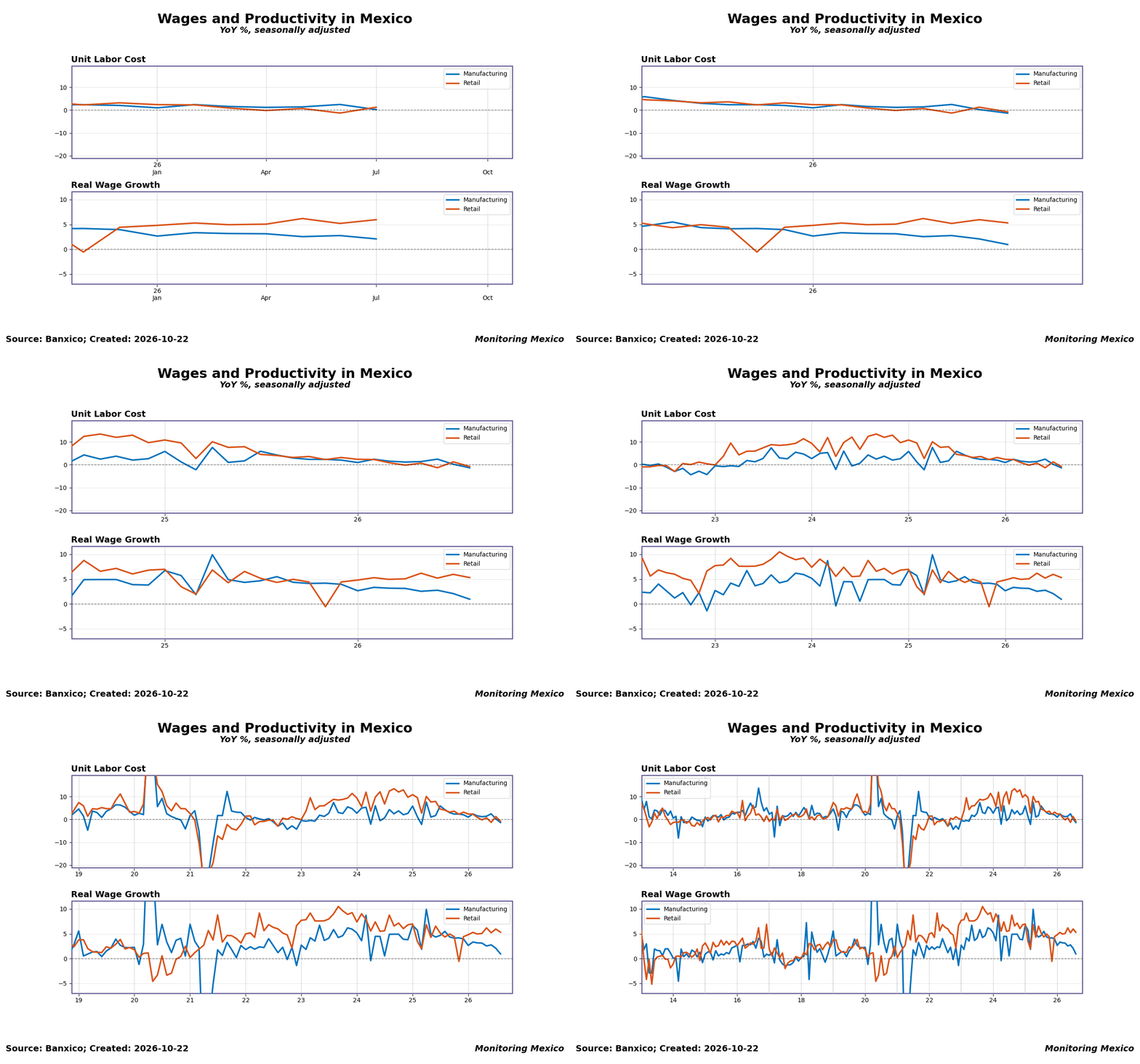
The August 2026 IMSS release shows unit labor costs at -1.37%, indicating that productivity gains are outpacing wages. Following August's formal sector wage data, ULC in manufacturing has fallen, with a month-over-month decline of -1.58%. This decline suggests that productivity is improving relative to wage growth, which may enhance competitiveness in the sector, albeit at the potential cost of wage suppression. The current level sits at the 16th percentile historically, underscoring a challenging environment for wage earners in manufacturing.
Real wages in the formal sector are displaying a positive trajectory, with recent growth at 0.94%. Purchasing power among formal workers is improving, as evidenced by the positive real wage growth, despite a month-over-month decrease of -1.14%. This indicates that households are experiencing a modest increase in their purchasing power, which could bolster consumer spending in the near term, thereby supporting overall economic activity. However, the decline in the latest month highlights ongoing volatility in wage dynamics.
Across sectors, retail outperforms manufacturing in real wage growth, with retail real wages reported at 5.30%. This divergence in real wages highlights a significant gap wherein the retail sector is experiencing robust wage growth, contrasted with manufacturing's more subdued performance. The relative strength in retail suggests that consumer-facing sectors may be better positioned to absorb inflationary pressures, while manufacturing continues to grapple with slower wage dynamics. Consequently, this disparity could influence labor market trends and consumer behavior moving forward.
SARIMAX Forecast Comparison
| Series | Current | Prev. Forecast | Error | 12M Forecast | Prev. 12M | Revision |
|---|---|---|---|---|---|---|
| ULC Manufacturing | — | — | — | -1.0 | -1.0 | +0.00 |
| ULC Retail | — | — | — | -0.6 | -0.6 | +0.00 |
| Real Wage Mfg | — | — | — | 1.0 | 1.0 | +0.00 |
| Real Wage Retail | — | — | — | 5.5 | 5.5 | +0.00 |
All values in % (MoM, seasonally adjusted). "Error" = actual − previous forecast. "Revision" = change in 12-month outlook. "—" = no prior forecast available.
Unit labor costs (ULC) measure the average cost of labor per unit of output — when wages grow faster than productivity, ULC rises, potentially squeezing profit margins and fueling inflation. In Mexico, where the formal sector employs roughly half the workforce, IMSS-registered wage data captures trends in the formal economy but misses the informal sector's dynamics. Real wages — nominal wages adjusted for inflation — determine household purchasing power and underpin consumer demand. For policymakers, these indicators help balance inflation control, competitiveness, and the economic welfare of Mexican workers.
Twelve-month-ahead forecasts for unit labor costs and real wages in manufacturing and retail are produced using a Seasonal Autoregressive Integrated Moving Average with eXogenous inputs (SARIMAX) model. The model is estimated on seasonally adjusted month-over-month percentage changes, with all four series — ULC manufacturing, ULC retail, real wage manufacturing, and real wage retail — entering as joint endogenous variables. No external auxiliary data feed the forecast; the model relies solely on the internal dynamics and cross-series interactions of the wage and productivity data. Forecast confidence intervals widen over the projection horizon.
Out-of-sample 12-period-ahead forecast backtest over 32 evaluation windows using the SARIMAX. Out-of-sample 12-period-ahead forecast backtest over 32 evaluation windows using the SARIMAX. RMSE measures the typical forecast error in the same units as the series; 'naive' is a no-change benchmark. ULC Manufacturing (RMSE 2.87 vs 3.05 naive — 6% better than the benchmark, n=32); ULC Retail (RMSE 6.25 vs 6.39 naive — 2% better than the benchmark, n=28); Real Wage Manufacturing (RMSE 2.33 vs 2.71 naive — 14% better than the benchmark, n=32); Real Wage Retail (RMSE 2.99 vs 2.89 naive — 4% worse than the benchmark, n=28).
Updated: 2026-09-19 by María López
Key Takeaways
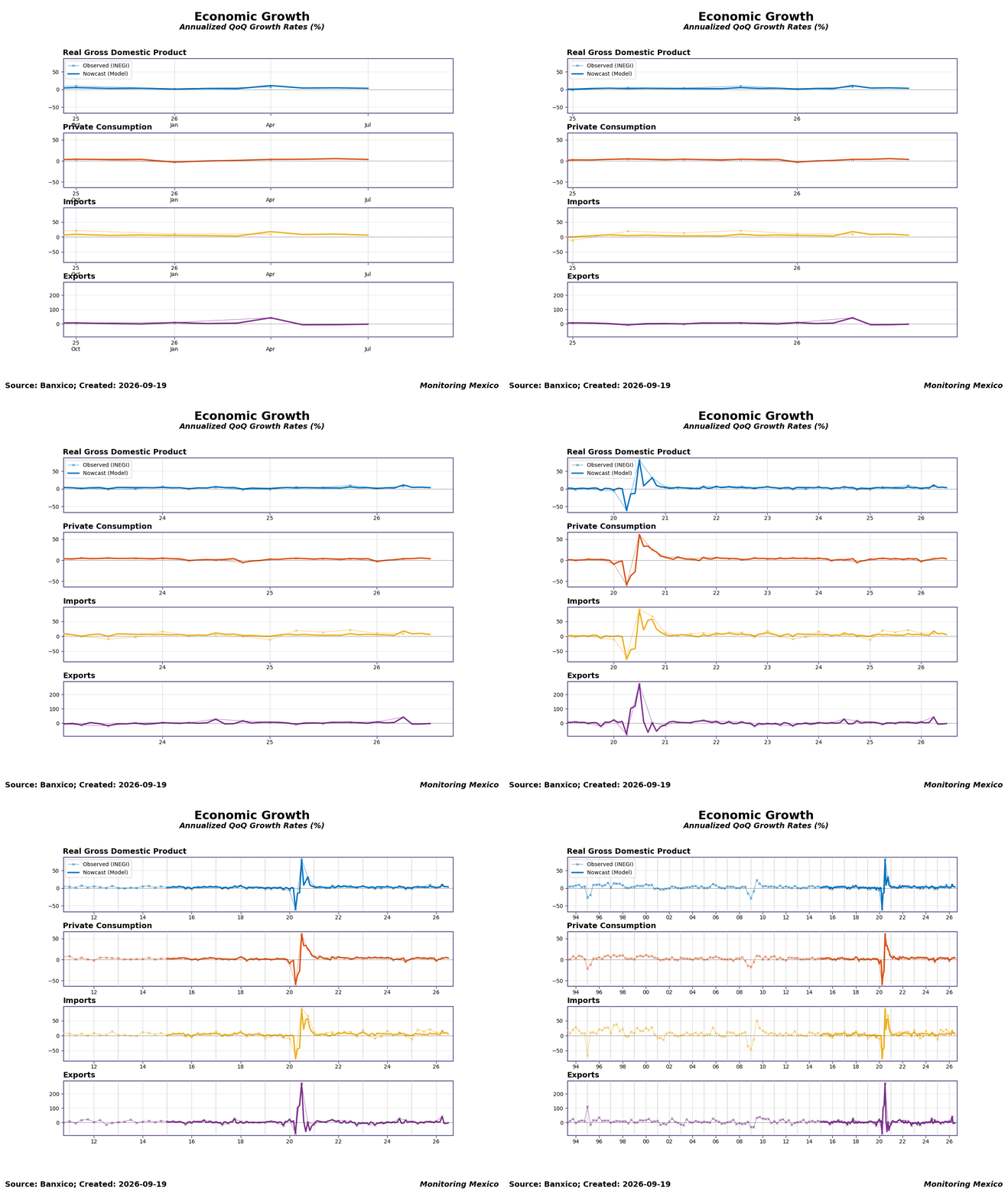
Following the latest quarterly GDP release from INEGI, real GDP growth in Mexico is now projected at an annualized rate of 3.29%, reflecting a downward revision of 1.26pp from previous estimates. This change underscores a significant recalibration of expectations, as the economy grapples with persistent inflationary pressures and external uncertainties. The revised growth rate signals a need for caution among policymakers and investors alike, as the foundation for robust economic expansion remains shaky in the face of ongoing challenges. With global inflation risks and domestic security issues swirling, the stakes for economic performance have never been higher.
Private consumption continues to show resilience but at a slower pace. The current estimate for private consumption growth stands at 3.51%, down 1.82pp from previous projections. While household spending still contributes positively to overall activity, the decline suggests that consumers are feeling the pinch, potentially curbing their spending power amid rising costs. This shift indicates that while demand remains, it may not be strong enough to offset broader economic headwinds.
Exports are experiencing a contraction, signaling weak external demand. The latest data indicates that exports have dipped to -1.89%, a shift of 3.42pp from last period. This downturn is a concerning signal about the robustness of international demand for Mexican goods, particularly as the global economy faces uncertainties. A decline in exports could further exacerbate the challenges for domestic producers relying on foreign markets for growth.
Imports reflect a dip, hinting at softer domestic demand. Current estimates for imports show growth at 6.13%, down 3.83pp from prior figures. This reduction suggests that domestic absorption is waning, potentially influenced by tightening household budgets and cautious business investment. As domestic demand softens, it raises questions about the sustainability of economic momentum moving forward.
Net trade dynamics remain unaddressed due to the lack of data clarity. Given the declines in export performance and the moderated import growth, the net trade contribution to GDP remains ambiguous at this time. Without clearer insights into trade balances, stakeholders are left to speculate on how these factors will ultimately play out in the broader economic landscape.
DFM GDP Nowcasts
| Component | Last Obs. (Q2 2026) | Nowcast (Q3 2026) | Prev. Nowcast | Revision |
|---|---|---|---|---|
| Real Gross Domestic Product | 7.04% | 3.29% | 3.29% | +0.00 |
| Private Consumption | 3.51% | 3.51% | 3.51% | +0.00 |
| Imports | 9.60% | 6.13% | 6.13% | +0.00 |
| Exports | 42.70% | -1.89% | -1.89% | +0.00 |
QoQ annualized, seasonally adjusted. Nowcast = DFM filtered estimate using higher-frequency inputs. "Revision" = change from previous run.
Real activity data tracks the economy's engine — output, spending, and trade — while nowcasts bridge the lag between releases. Real GDP captures total production; private consumption reflects household demand; exports and imports reveal external demand and the flow of inputs for Mexico's trade-exposed, manufacturing-heavy economy. Shifts in U.S. demand, global prices, and the peso often show up first in trade, then filter into GDP and consumption. Because official series arrive with delays and revisions, model-based nowcasts provide an early, probabilistic read for policy timing — useful if treated with uncertainty bands and cross-checked against higher-frequency signals.
A Dynamic Factor Model (DFM) nowcasts quarterly GDP and its demand components — private consumption, imports, and exports — from a panel of 20 series. Each target is estimated separately, and each reads the same panel: the quarterly national accounts, six monthly activity indicators (IGAE, industrial production, consumer confidence, manufacturing capacity utilization, business sales conditions, and the monthly private consumption indicator), and the quarterly ENOE labour-market measures. The predictors are compressed to their leading principal components, and the model extracts common factors via the Kalman filter, updating the nowcast each time any input series receives new data. Nowcast estimates are conditional expectations that narrow as more data arrive within each quarter. Revision notice (22 August 2026). The growth rates on this page have been restated. Until now the quarterly national accounts were passed through an additional seasonal-adjustment step, even though Banxico already publishes them seasonally adjusted. Removing it changes the published figures — for real GDP by 0.8 percentage points on average and by 4.9 points in the most recent quarter, and by more again for imports. The restated figures follow the source statistics directly. Accuracy statistics have been recomputed on the same basis and now withhold every series that the statistical agency publishes in the same release as the one being predicted, which lowers the measured advantage of the GDP nowcast over a no-change benchmark from 39% to 11%. Alongside the restatement, IGAE — INEGI's monthly indicator of activity for the whole economy, which had been missing from the panel — has been added, and it raises that advantage to 32% while improving every series on the page. This page is under an ongoing methodological review; further revisions of this kind are likely, and each will be noted here.
Out-of-sample backtest over 12 evaluation windows using the Dynamic Factor Model (DFM). Out-of-sample backtest over 12 evaluation windows using the Dynamic Factor Model (DFM). RMSE measures the typical error in the same units as the series; 'naive' is a no-change benchmark. Real GDP (RMSE 3.59 vs 5.25 naive — 32% better than the benchmark, n=12); Private Consumption (RMSE 2.94 vs 3.98 naive — 26% better than the benchmark, n=12); Exports (RMSE 9.65 vs 10.14 naive — 5% better than the benchmark, n=12); Imports (RMSE 10.92 vs 14.32 naive — 24% better than the benchmark, n=12).
Updated: 2026-10-23 by Alexander Dentler
Key Takeaways
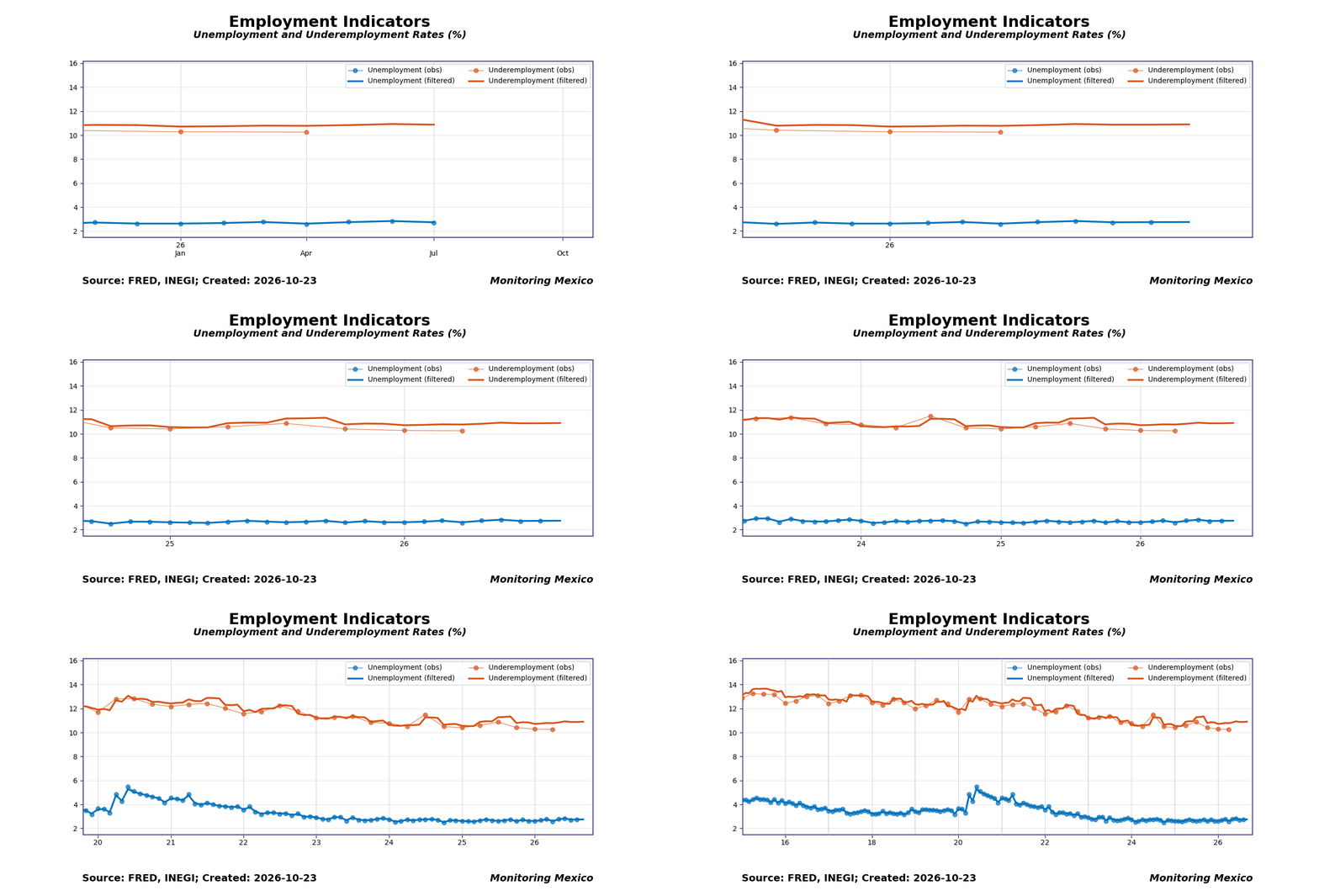
The latest ENOE survey for August 2026 shows unemployment at 2.75%, indicating a slight increase from the previous month. The August 2026 ENOE survey shows unemployment at 2.75%, reflecting a modest rise of 0.0071 from July. This level situates the unemployment rate around the 24th percentile historically, suggesting that while it remains low, the upward trend over the past two months warrants cautious observation. Underemployment, meanwhile, has increased to 10.9%, marking a notable rise of 0.0201 month-over-month and contrasting with a decline compared to the previous year. This divergence could signal underlying weaknesses in labor market stability.
By gender, the unemployment landscape reveals intriguing dynamics. Male and female unemployment rates are currently at 2.46% and 2.61%, respectively, with both rates experiencing a decline over the past three months. Notably, the male unemployment rate has decreased by 0.0776 from the previous month, while the female rate has similarly fallen by 0.0468. The slight divergence, with males experiencing a more pronounced downward trend, may suggest differing impacts of economic conditions on gender-specific employment opportunities.
The share of informal workers continues to exhibit a rising trend. The share of informal employment rose to 54.2% in August, up 0.0745 from July. This increase, although modest, positions informality around the 23rd percentile historically and indicates a persistent challenge within Mexico's labor market. As informality continues to rise, it may exacerbate the vulnerabilities of workers, suggesting a need for targeted policy interventions to enhance job security and formal employment opportunities.
DFM Employment Nowcasts
| Indicator | Last Obs. (Q3 2026) | Nowcast (Q3 2026) | Prev. Nowcast | Revision |
|---|---|---|---|---|
| Unemployment Rate | 2.75% | 2.75% | — | — |
| Underemployment Rate | 10.26% | 10.90% | — | — |
| Male Unemployment | 2.63% | 2.46% | — | — |
| Female Unemployment | 2.69% | 2.61% | — | — |
Observed = latest quarterly ENOE value. Nowcast = DFM filtered estimate using monthly auxiliary data. "Revision" = change from previous run.
Labor slack and its composition shape inflation pressure, policy timing, and social risk. Unemployment, underemployment, and unemployment by gender reveal how broad and uneven slack is. In Mexico's large informal sector, the informal employment share can swing sharply — often contracting faster in downturns as unprotected jobs are cut first, then rebounding early — masking true slack if headline unemployment alone is tracked. Tracking these dimensions helps distinguish cyclical slack from structural mismatches and calibrate monetary policy accordingly.
Between quarterly ENOE survey releases, a Dynamic Factor Model (DFM) nowcasts employment indicators using higher-frequency auxiliary data. The model ingests monthly series — industrial production, consumer confidence, manufacturing capacity utilization, business sales conditions, and the monthly private consumption indicator — alongside quarterly GDP components to extract common factors that track the business cycle. When any auxiliary series receives new data, the Kalman filter updates the nowcast, providing an early signal before the next official employment release. These are current-state estimates, not forecasts: they say where the labour market stands now given data published so far, filling the gap between quarterly survey releases. They are not predictions of where it will be next quarter.
Out-of-sample nowcast backtest over 39 evaluation windows using the Dynamic Factor Model (DFM). Out-of-sample nowcast backtest over 39 evaluation windows using the Dynamic Factor Model (DFM). RMSE measures the typical estimate error in the same units as the series; 'naive' is a no-change benchmark. Unemployment (RMSE 0.20 vs 0.12 naive — 71% worse than the benchmark, n=39); Underemployment (RMSE 0.55 vs 0.50 naive — 9% worse than the benchmark, n=31 over 11 periods); Male Unemployment (RMSE 0.21 vs 0.25 naive — 19% better than the benchmark, n=31 over 11 periods); Female Unemployment (RMSE 0.23 vs 0.29 naive — 20% better than the benchmark, n=31 over 11 periods).
Updated: 2026-10-13 by Alexander Dentler
Key Takeaways
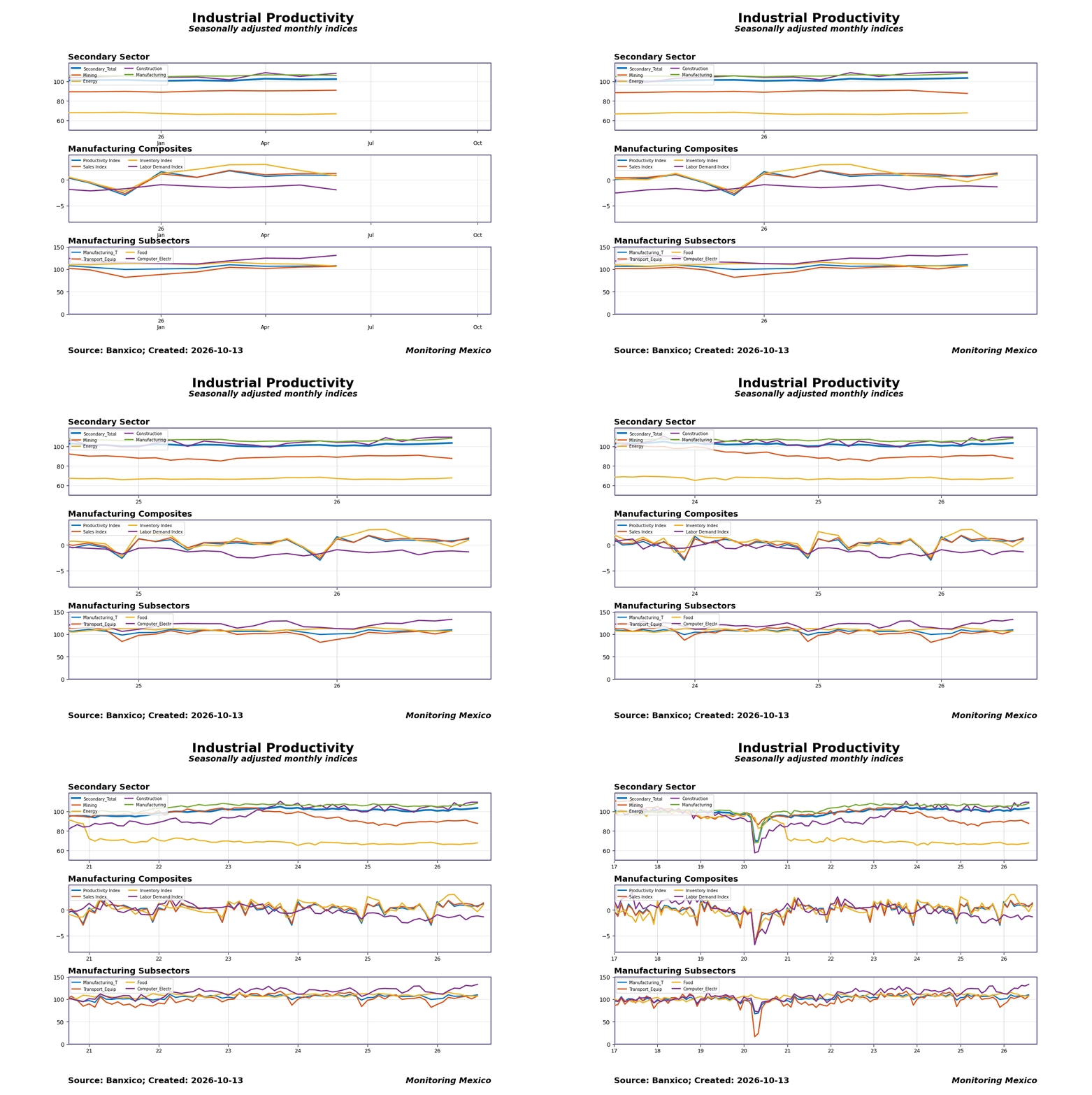
INEGI's Q3 2026 productivity release shows secondary sector output at 103, reflecting a notable upward trend driven primarily by manufacturing. The latest INEGI productivity data for Q3 2026, released on October 13, indicates that secondary sector output stands at 103, a figure that places it in the 97th percentile historically. This upward movement, which saw a rise of 0.623 from the previous month, is largely propelled by the manufacturing subsector, demonstrating broad-based growth rather than being confined to a few industries. Notably, it has been 31 months since the series exceeded today’s level, underscoring a robust recovery trajectory.
Across the PCA indices, manufacturing composites reveal a nuanced landscape of productivity and sales dynamics. Manufacturing composites show a productive environment, with the productivity index at 1.18, representing an upward shift of 0.361 over the previous month. However, the divergence between productivity growth and labor demand, which remains negative at -1.34, raises sustainability concerns regarding the resilience of this growth. The robust sales index, in contrast, suggests strong demand, yet the mismatch with labor demand indicates potential challenges ahead.
Within manufacturing, the top-performing subsectors are petroleum and coal products, alongside computer and electronic equipment, while food manufacturing lags behind. The top-performing subsectors include petroleum and coal products, which have surged to a record high, reflecting an impressive 20.1 increase over the past six months. Conversely, the food manufacturing subsector has underperformed, indicating potential vulnerabilities within an otherwise strong manufacturing landscape. Given that manufacturing constitutes a substantial 65.56% of the secondary sector, the performance of these subsectors is critical for shaping the overall productivity outlook.
PCA Composite Indices
| Index | Aug 2026 | Sep 2026 | Δ |
|---|---|---|---|
| Productivity Index | 0.82 | 1.18 | +0.36 |
| Sales Index | 0.60 | 1.38 | +0.78 |
| Inventory Index | -0.33 | 0.94 | +1.27 |
| Labor Demand Index | -1.15 | -1.34 | -0.19 |
Standardized scores (0 = mean, ±1 = one standard deviation).
Productivity trends reveal the economy's capacity to grow without stoking inflation. In Mexico, productivity in the secondary sector — mining, energy, construction, and especially manufacturing — signals how efficiently output expands relative to inputs. Strong productivity gains mean firms can meet demand without raising prices, easing inflation pressure and supporting sustainable wage growth. Weak productivity, by contrast, constrains supply, making cost shocks more inflationary. Manufacturing deserves closer scrutiny, as its diverse subsectors respond differently to global demand, exchange rate shifts, and investment cycles. Tracking these patterns helps judge whether growth is supported by efficiency gains or reliant on credit and labor cost increases.
Four composite indices — productivity, sales, inventory, and labor demand — are constructed using Principal Component Analysis (PCA) applied to INEGI manufacturing subsector data and GDP sector composition. PCA extracts the dominant co-movement pattern across subsectors, producing standardized indices that summarize broad trends while filtering out subsector-specific noise. The productivity index draws on output-per-worker measures across manufacturing branches; the sales, inventory, and labor demand indices use INEGI's corresponding survey-based indicators supplemented by GDP sector weights.
Updated: 2026-10-06 by Ignacio Crane
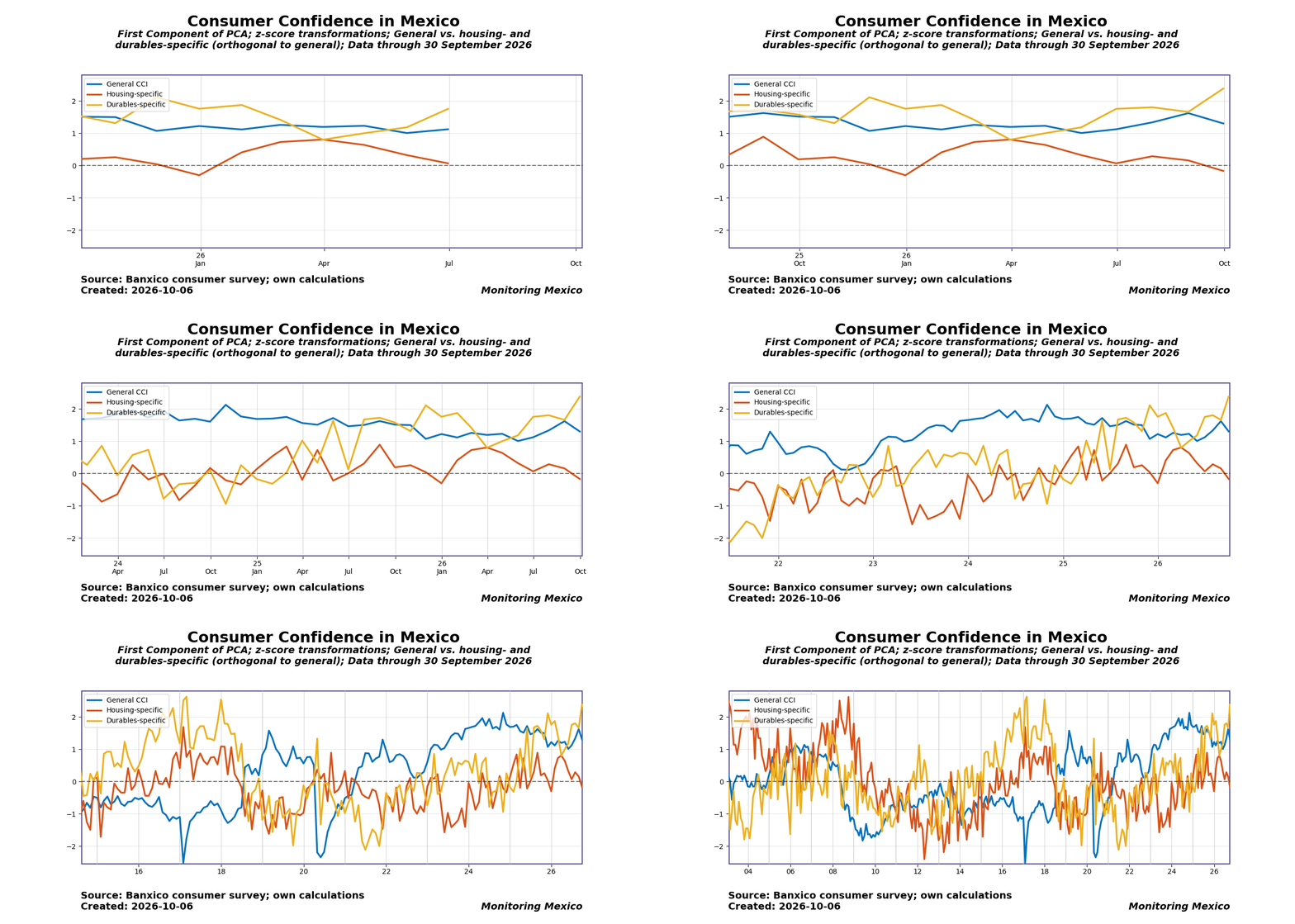
The September 2026 INEGI Consumer Confidence survey shows the general index at 1.30, reflecting a robust sentiment despite recent fluctuations. INEGI's latest September release reveals confidence at an elevated level, positioned at the 89th percentile historically. While the general index experienced a modest decline of -0.32, it remains considerably optimistic relative to past performance. Notably, the durables-specific index surged to an impressive 2.38, indicating a strong consumer appetite for durable goods, whereas the housing-specific index has faltered, now resting at -0.17. This divergence underscores potential vulnerabilities in the housing market, which may signal broader economic implications if sentiment in this sector continues to weaken.
PCA Confidence Indices
| Index | Aug 2026 | Sep 2026 | Δ |
|---|---|---|---|
| General Sentiment | 1.62 | 1.30 | -0.32 |
| Housing Appetite | 0.16 | -0.17 | -0.33 |
| Durables Appetite | 1.66 | 2.38 | +0.72 |
Values are z-scores (0 = historical mean, ±1 = one standard deviation).
The ENCO (Encuesta Nacional sobre Confianza del Consumidor) is conducted jointly by INEGI and Banco de México. Roughly 2,300 households across 32 major cities are interviewed during the first 20 days of each reference month, and results are published around the 5th of the following month. The survey uses a rotating panel design — each household stays in sample for four consecutive months, rests for eight, then returns for four more — which smooths out idiosyncratic response noise while capturing genuine shifts in sentiment. Because confidence data arrive before most hard activity indicators for the same month, they provide an early read on whether household demand is strengthening or cooling.
Three composite confidence indices — general sentiment, housing appetite, and durables appetite — are extracted from the eight raw INEGI survey questions using Principal Component Analysis (PCA). PCA identifies the common variation within each question group, producing a single index that captures the dominant signal while filtering out question-specific noise. The general index draws on six broad economic outlook questions; the housing and durables indices each isolate spending appetite in categories most sensitive to interest rates and household balance sheets.
Updated: 2026-10-01 by Alexander Dentler
Key Takeaways
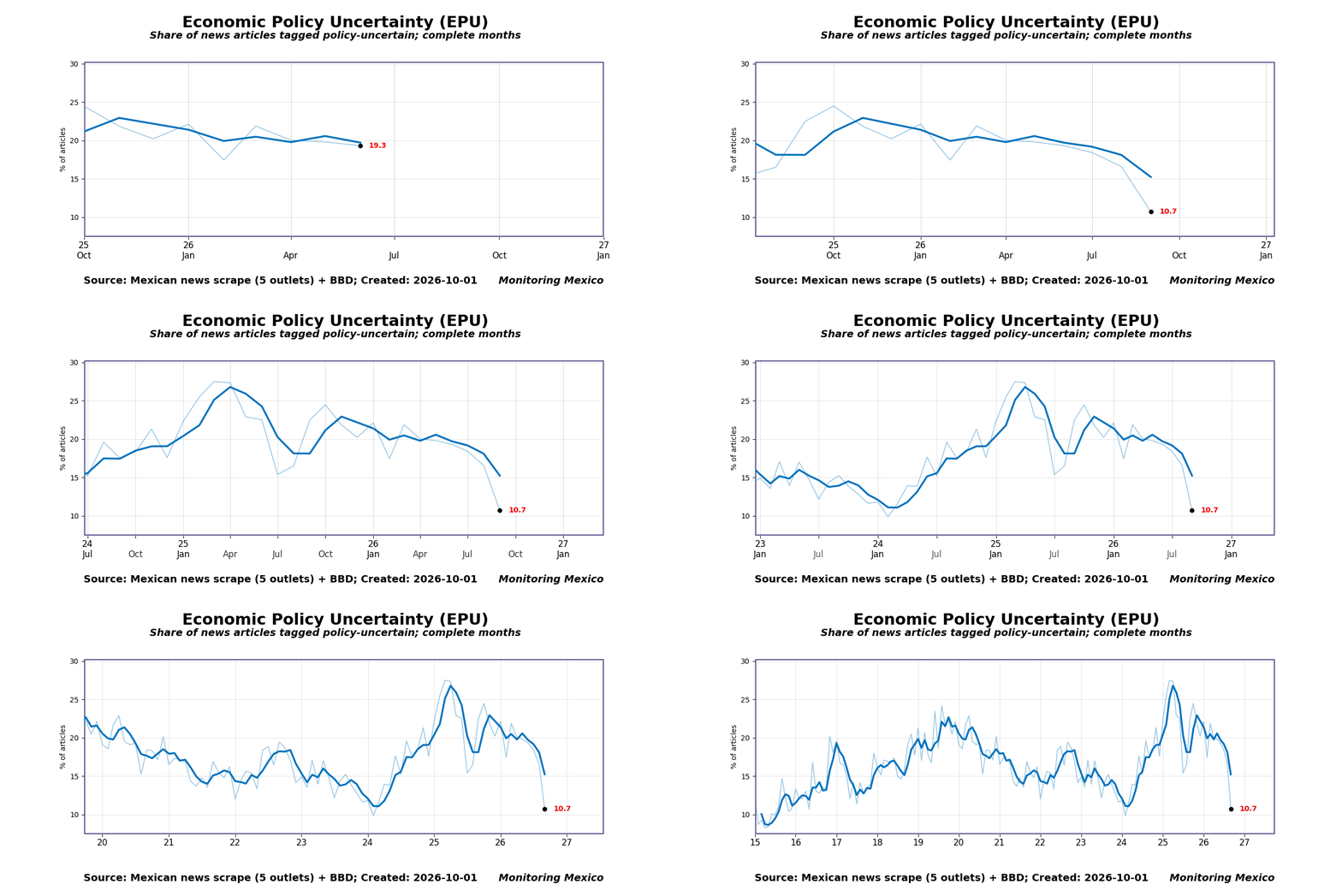
Mexican news coverage of policy uncertainty in September 2026 stands at 10.7%, reflecting a significant decline in sentiment. News-based policy uncertainty in September 2026 shows a share of articles tagged as policy-uncertain at 10.7%. This marks a notable reduction compared to the preceding three-month trend of 19.3% and a 12-month trend of 22.5%. The current level indicates a clear downward trajectory, suggesting a potential easing of concerns regarding policy stability as the economy navigates a complex landscape.
By category, fiscal and monetary policies dominate the current uncertainty narrative. Within the uncertainty narrative, the most significant movement has been observed in fiscal policy, which has decreased by 1.0% to now account for 2.0% of articles. Monetary policy uncertainty also contributes prominently, underscoring the delicate balance policymakers must strike as they assess economic signals. This shift indicates a reallocation of focus among stakeholders, potentially reflecting growing confidence in certain fiscal measures despite broader concerns.
Compared with the officially published BBD index, the trends in policy uncertainty align closely. Against the Baker-Bloom-Davis benchmark, the news-derived Economic Policy Uncertainty index aligns with the BBD index, which recorded a value of 109.6 for September 2026, also reflecting a decline over the past three months. This convergence suggests that both measures are capturing similar underlying dynamics in the economic landscape, with decreasing concerns about policy uncertainty resonating across different analytical frameworks. The consistent downward trend in both indices reinforces the narrative of a stabilizing environment, albeit amidst ongoing vigilance regarding external pressures.
The Economic Policy Uncertainty (EPU) index tracks the share of Mexican news articles whose text matches terms spanning three categories — the economy, uncertainty, and policy — scraped daily from five major outlets since 2015 and aggregated into daily, weekly, and monthly indices across 15 policy categories (monetary, fiscal, trade, regulation, and more). This news-derived measure is compared against the externally-published Baker-Bloom-Davis (BBD) Mexico EPU index (policyuncertainty.com), the original academic methodology on which this approach is based. Because uncertainty coverage often front-runs formal policy announcements, the index provides an early, text-based signal of shifting attention toward economic policy risk.
Updated: 2026-10-02 by María López
Key Takeaways
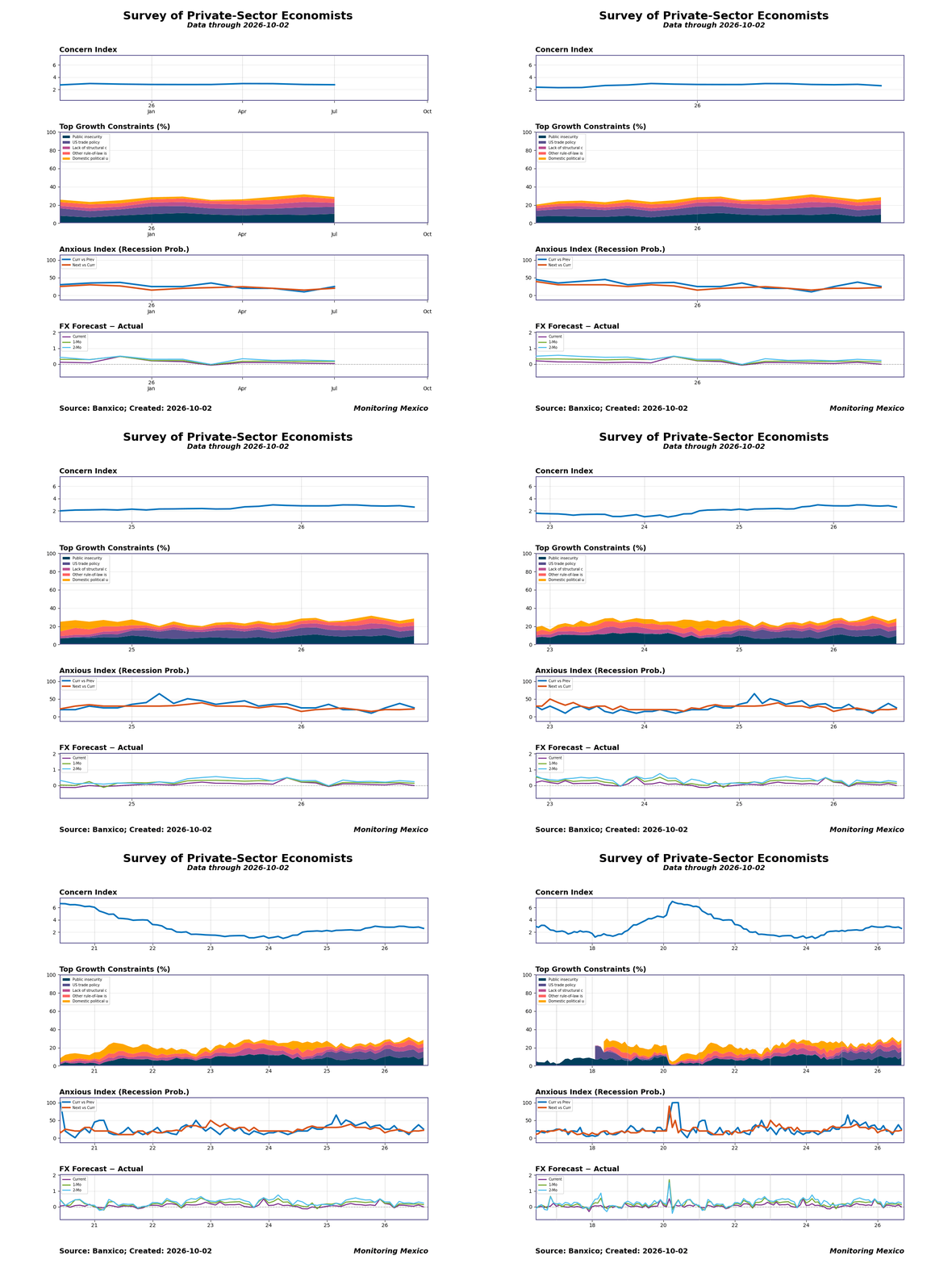
The September 2026 SPF survey shows the aggregate Concern Index at 2.62, reflecting a drop of 0.22 from the previous month. The September 2026 SPF survey shows the aggregate Concern Index at 2.62, positioning it around the 56th percentile. This marks a downward movement, continuing a streak of declining concerns for the first time in over a year. With the index falling by 0.22, it suggests that while worries persist, the intensity is easing, potentially reflecting shifting economic expectations.
Economists have identified public insecurity, US trade policy, and a lack of structural change as the top growth constraints currently cited. The key constraints currently cited include public insecurity at 9.5%, US trade policy at 6.4%, and a lack of structural change at 4.8%. The most significant month-over-month mover is public insecurity, which saw an increase of 2.16%. This signal indicates that while some concerns are subsiding, the persistent threat of public insecurity remains a critical challenge for economic stability.
The perceived probability of recession among surveyed economists stands at 25.3%, reflecting a moderate level of concern. Recession concerns among surveyed economists are currently moderate, as the Anxious Index indicates a 25.3% probability of recession compared to the previous quarter. This level is elevated relative to historical norms, suggesting that while the economy shows signs of recovery, uncertainty lingers. The outlook for the next quarter is slightly lower at 22.0%, hinting at a cautious optimism moving forward.
According to forecasters, the peso is perceived as undervalued in the current month. FX expectations suggest that forecasters see the peso as undervalued by 0.004 relative to actual rates. This reflects a more optimistic view in the short term, although the outlook turns bearish for the following month with expectations of a stronger peso than anticipated. Such fluctuations highlight the volatility in currency forecasts, emphasizing the need for careful monitoring in light of broader economic conditions.
Banxico's Survey of Professional Forecasters (Encuesta sobre las Expectativas de los Especialistas en Economía del Sector Privado) polls roughly 40 groups of analysts from banks, financial institutions, consultancies, and research centers. Responses are collected during the second half of each reference month — typically between the 15th and 28th — and results are published on the first business day of the following month. Because respondents form their expectations before some end-of-month official data releases, the survey provides an early window into shifting professional sentiment on inflation, growth constraints, recession risk, and exchange rates, making it a valuable leading indicator for policymakers and market participants.
Updated: 2026-10-27 by María López
Key Takeaways
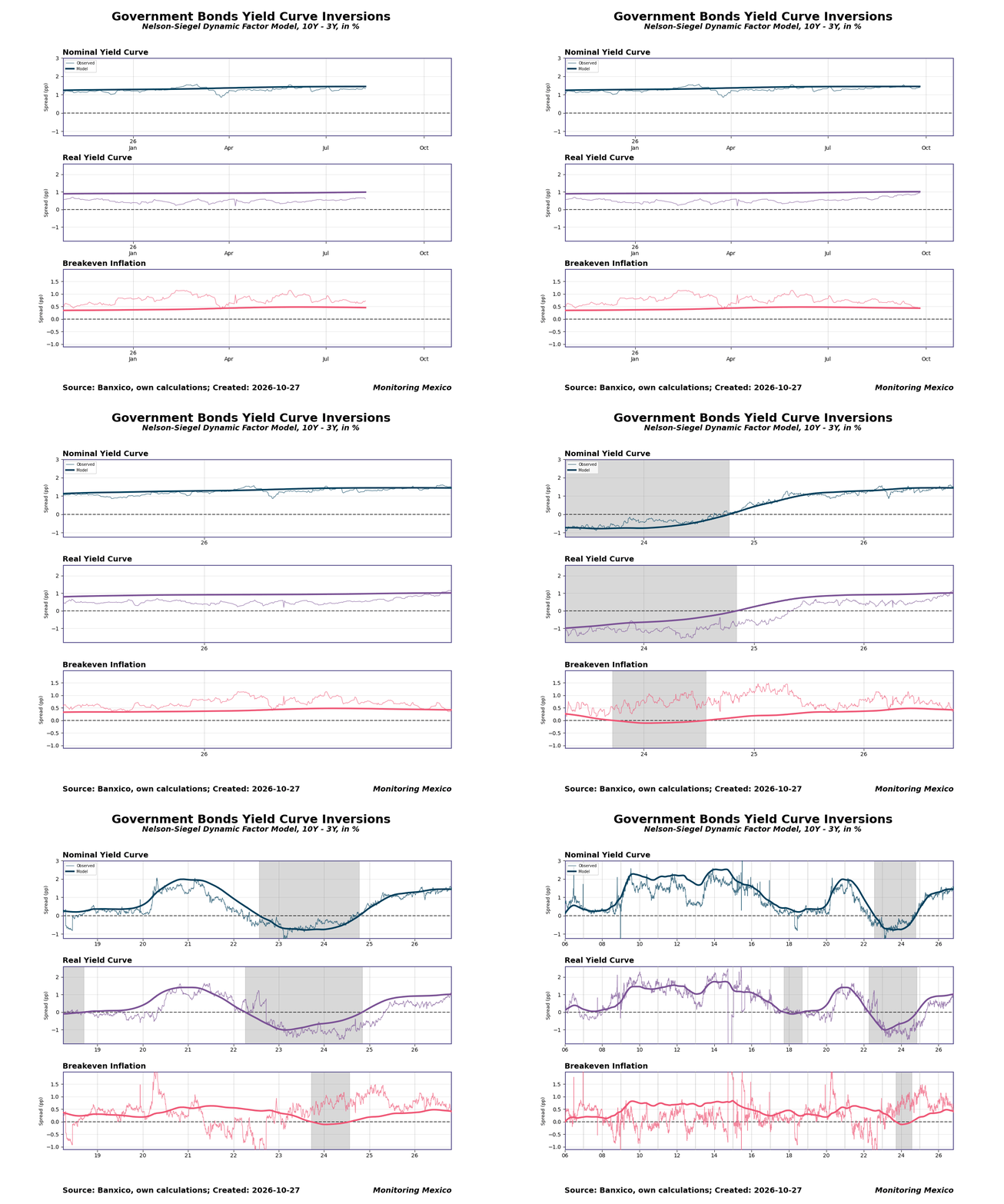
Bond prices as of 2026-10-27 show the 10Y-3Y spread at 1.51%, reflecting a notable uptick of 0.12% from the previous observation. The latest yield curve data reveals the nominal 10Y-3Y spread at 1.51%, up from 1.39%, while the real spread has risen to 1.15%, a change that signals a shift in investor sentiment. With both spreads maintaining normal status, the market appears to be absorbing the implications of an uncertain economic environment. The breakeven inflation spread suggests that inflation expectations remain anchored but cautious, reflecting anxiety about future price pressures. Overall, these movements in the yield curve indicate a market that is alert to potential shifts in monetary policy and economic performance.
The curve shape suggests markets are positioned for a potential rate cut, aligning with the 50% probability of a modest reduction in the upcoming Banxico meeting. Markets appear to be pricing in a potential rate cut, with the current yield curve suggesting a belief in supportive monetary policy as inflation pressures ebb. However, the cautious tone from Banxico's recent communications highlights the risks of external factors and domestic stability issues, which could temper any easing of rates. This divergence between market sentiment and policy signals could create a scenario ripe for adjustments, particularly if geopolitical developments or economic shocks occur.
Yield Spread Update
| Spread (10Y−3Y) | 23 Oct | 26 Oct 2026 | Δ | NS-DFM |
|---|---|---|---|---|
| Nominal | 1.50 | 1.51 | +0.008 | 1.44 |
| Real | 1.15 | 1.15 | -0.002 | 1.02 |
| Inflation | 0.35 | 0.36 | +0.009 | 0.42 |
All values in percentage points. NS-DFM = Nelson-Siegel Dynamic Factor Model filtered estimate.
When investors and businesses trust that monetary policy will remain credible and predictable, long-term interest rates respond more smoothly to central bank signals. Yield curve spreads between long and short maturities serve as a real-time gauge of this alignment: a stable, upward-sloping curve suggests markets expect gradual normalization, while persistent inversions often signal that markets anticipate policy shifts before they are announced. For Mexico, where inflation targeting depends on anchoring expectations across a diverse investor base, the 10-year minus 3-year spread offers a compact summary of whether policy communication is landing as intended.
Yield curve spreads are filtered using a Nelson-Siegel Dynamic Factor Model (NS-DFM) estimated on weekly data. The model ingests 16 synthetic yield curve points — 11 nominal maturities (overnight through 30 years) and 5 real maturities (overnight through 30 years) — fitted via Nelder-Mead optimization on Banxico bond prices. Factor loadings follow the Diebold-Li (2006) Nelson-Siegel parameterization, decomposing each yield curve into level, slope, and curvature components for both real rates and implied inflation. The Kalman smoother extracts filtered spread estimates that track the underlying signal in daily bond market noise.
Updated: 2026-10-27 by María López
Key Takeaways
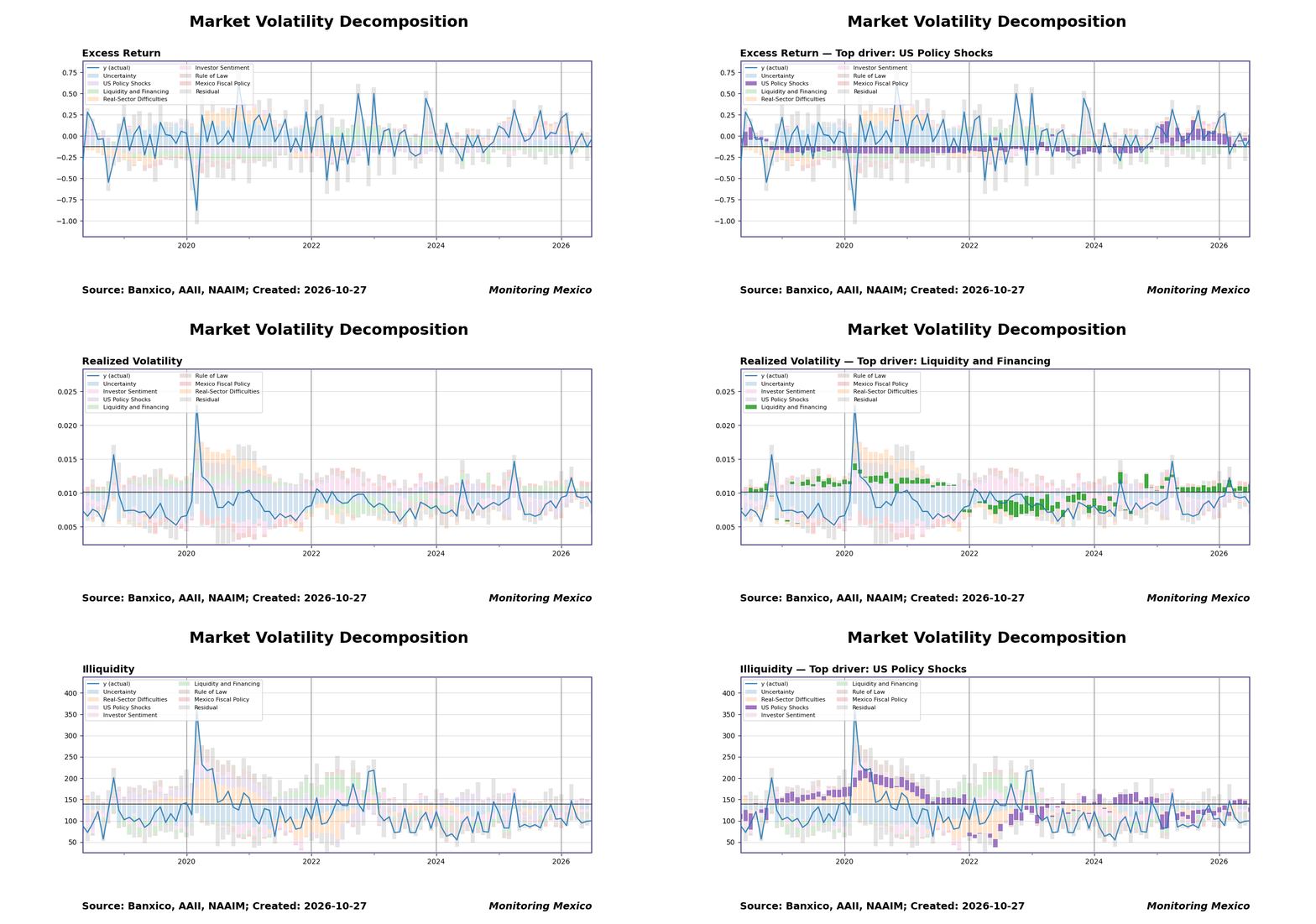
Mexican equity markets as of October 27, 2026, show excess returns at -0.0269, reflecting a slight uptick from the previous month. With data through October 27, market conditions indicate that excess returns have dipped to -0.0269, while realized volatility sits at 0.0083. This drop in volatility is noteworthy as it signals a potential easing of market tensions amid ongoing uncertainties. However, the Amihud illiquidity index has not shown material movement, indicating that investor participation remains stable despite the backdrop of rising policy uncertainties.
The decomposition shows that recent volatility has been driven primarily by US policy shocks and liquidity concerns, which have historically impacted market dynamics. Recent volatility has been driven by a combination of US policy shocks and liquidity challenges, which are exerting pressure on market sentiments. Persistent contributors like these suggest that external factors are weighing heavily on Mexican markets, amplifying the already existing uncertainties stemming from domestic issues. As investor focus sharpens on these macro drivers, the ability for local equity markets to stabilize could be further tested.
Investor sentiment remains cautious, with notable levels of policy uncertainty reflected in recent surveys. Investor sentiment appears subdued, as evidenced by declining levels in the AAII and NAAIM indices, signaling a cautious approach among market participants. The prevailing economic policy uncertainty is dominating discussions, with a marked focus on public security and its implications for economic stability. As these sentiments permeate the market, they underscore the challenges ahead for both investors and policymakers.
Volatility Measures
| Measure | Sep 2026 | Oct 2026 | Δ | Top Driver |
|---|---|---|---|---|
| Excess Return | -0.1144 | 0.4121 | +0.5265 | US Policy Shocks (+0.124) |
| Realized Volatility | 0.0068 | 0.0085 | +0.0017 | Liquidity and Financing (+0.001) |
| Illiquidity (Amihud) | 91.8841 | 92.4454 | +0.5613 | US Policy Shocks (-10.413) |
Monthly averages. Top Driver = largest OLS category contribution to latest value.
Financial market returns, volatility, and liquidity signal investor sentiment and risk appetite. Excess returns over government bonds capture the risk premium investors demand for holding equities; wider spreads suggest higher perceived risk or stronger growth prospects. Realized volatility in a stock market index reflects uncertainty — sharp swings indicate fragile sentiment and raise the cost of capital. Illiquidity shows how trading volume and price impact interact: when liquidity dries up, small trades can move prices disproportionately, amplifying shocks. For monetary policy, these indicators matter because they shape funding costs, investment flows, and the broader transmission of rate decisions into financial conditions.
Volatility drivers are analyzed in two steps. First, Principal Component Analysis (PCA) groups the six SPF concern categories and investor sentiment indicators (AAII bull-bear spread, NAAIM exposure index) into thematic driver clusters that capture common variation. Second, an OLS regression decomposes recent volatility movements into contributions from each driver cluster, quantifying how much of the observed excess return and realized volatility is attributable to policy uncertainty, external sentiment, and domestic macro conditions. The decomposition is descriptive — it identifies contemporaneous associations, not causal effects.
Updated: 2026-10-27 by María López

Key Takeaways
Banxico's October 2026 credit release shows money market spreads tightening as rate expectations shift. Following the latest October lending data, rate premia have narrowed, with TIIE 28d at 0.28% and TIIE 91d at 0.32%. This tightening trend, reflected in a spread narrowing of -0.0573 from last month, indicates a growing consensus around the potential for a rate cut. The shift suggests that funding is becoming cheaper, which could incentivize borrowing and bolster economic activity.
The total annual cost of mortgages continues to reflect high rates but is showing signs of slight relief. Household mortgage rates average at 13.8%, with a range between 10.7% and 28.2%. While the policy rate pass-through remains substantial, the recent slight narrowing in spreads may enhance affordability, making it a bit easier for households to manage their mortgage commitments in an increasingly uncertain economic landscape.
Debt issuance patterns show a significant tilt toward fixed-rate financing as firms navigate rising costs. Corporate financing is increasingly dominated by fixed-rate debt, now making up 19.71% of GDP, compared to 10.76% for variable inflation-linked rates. This shift suggests that companies are taking a more cautious approach to financing, locking in rates amid an unpredictable economic environment, which could impact their long-term financial flexibility.
Rate premia show how market and bank funding costs move relative to the policy rate, indicating the efficiency of monetary transmission. Household mortgage rates capture the cost of long-term borrowing — their sharp rise in recent years signals affordability pressures and distributional effects, as many families face double-digit costs. Debt issuance patterns, normalized by GDP, reveal how firms finance themselves; the balance between fixed and variable rates matters for vulnerability to policy shifts. Together, these indicators show how policy rates filter into real borrowing conditions, affecting credit demand, investment, and ultimately growth and inflation dynamics.